Frankfurt/Cologne – The winners of the prestigious Innovation Award for Fibre-Reinforced Plastics, organised by the AVK – the German Federation of Reinforced Plastics, were announced this year on 20 October 2026 as part of the JEC Composites Talks DACH in Cologne.
The prize is awarded to companies, institutes and their partners in each of the three categories – ‘Products and Applications’, ‘Processes and Methods’ and ‘Research and Science’ – for outstanding innovations in composites. A panel of experts comprising engineers, scientists and specialist journalists assesses the entries in the three categories based on criteria such as the level of innovation, degree of implementation and sustainability.
Category Innovative Products and Applications
Place 1 | Anybrid
Partner: Avanco Composites, Mitsui Chemicals Europe, Strucnamics, AFPT, Hilti Kunststofftechnik, Institut für Leichtbau und Kunststofftechnik der TU Dresden
Composite Hybrid Power Tool
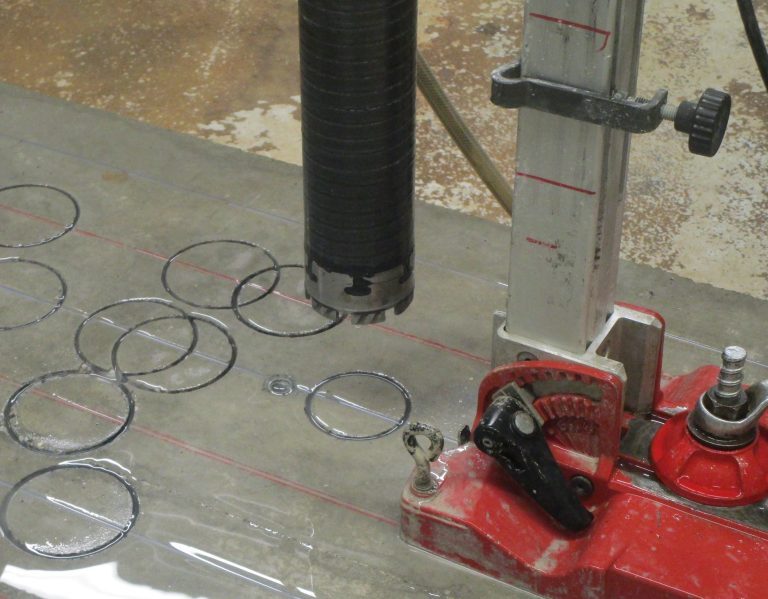
For the first time, a heavy-duty diamond drill bit has been produced as a thermoplastic fibre-reinforced composite component. The wound hollow body, made of carbon fibre-reinforced polypropylene (PP-CF), is connected to the metal thread via an injection-moulded connecting component. This application innovation is made possible by an integrated manufacturing process that combines laser-based tape winding with mobile injection moulding. The particularly challenging design of the connection zones was developed using a systematic analysis of the process-structure-property relationships and validated through extensive experimental investigations.
The results achieved speak for themselves: a weight reduction of approximately 70 per cent compared with steel, a service life that has at least doubled with further potential for improvement, and a CO₂ footprint reduced by approximately 37 per cent, supported by the targeted use of recycled materials produced directly from production waste.
Ultimately, it was demonstrated that a drill bit made of thermoplastic composites is suitable for practical use, as both the mechanical substitute tests and the real-world field trials were successfully passed.
Place 2 | RenewPoly GmbH
Partner: exist Forschungstransfer, UnternehmerTUM, TUM
FlexFuran™ – Hochleistungs-Polymersystem für flammhemmende Verbundwerkstoffe
FlexFuran™ is an innovative, bio-based polymer system developed for high-performance, fire-retardant composite materials. It provides a sustainable alternative to conventional fossil-based phenolic resin systems while maintaining the processing and performance requirements of demanding applications. Based on renewable furfuryl alcohol, FlexFuran™ combines high fire resistance, low smoke toxicity, and excellent mechanical performance with a significantly reduced environmental footprint. The resin can be processed using established composite manufacturing technologies (a drop in solution), including prepreg, infusion, and compression molding. Its tunable formulation enables adjustment of viscosity, curing behavior, toughness, and thermal properties to meet application-specific requirements. FlexFuran™ is a scalable, industrially viable solution for transportation, mobility, and other applications where fire safety, lightweight construction, and sustainability are essential.
Place 3 | RelineEurope GmbH
Alphaliner MH – Nachhaltige, innovative Sanierungslösung von Abwasserschächten
The Alphaliner MH is a UV-curing GRP manhole liner designed for the trenchless rehabilitation of dilapidated sewer manholes. The product is manufactured as a standardised, highly flexible hose liner in continuous lengths and delivered to the construction site in DN 630. On site, the liner is cut to size, suspended and expanded to fit the existing geometry using internal pressure, before curing takes place using UV technology. A lorry with a manhole trailer for liner preparation and a packer-core unit have been developed for the process.
The liner is based on a multi-year R&D project by RelineEurope GmbH, with patent applications relating to measurement and control technology during expansion, the design of the manhole liner base and the closure concept. Twenty on-site trials confirmed its practical suitability; series production is planned for 2026. Compared with open-cut construction, this trenchless rehabilitation method reduces excavation, new construction and transport requirements, whilst also lowering resource consumption and CO₂ emissions.
Category Innovative processes and procedures
Place 1 | CompriseTec GmbH
Partner: Institut für Flugzeug-Produktionstechnik (IFPT), Technische Universität Hamburg (TUHH), INVENT GmbH
Robotic Dieless Composite Manufacturing
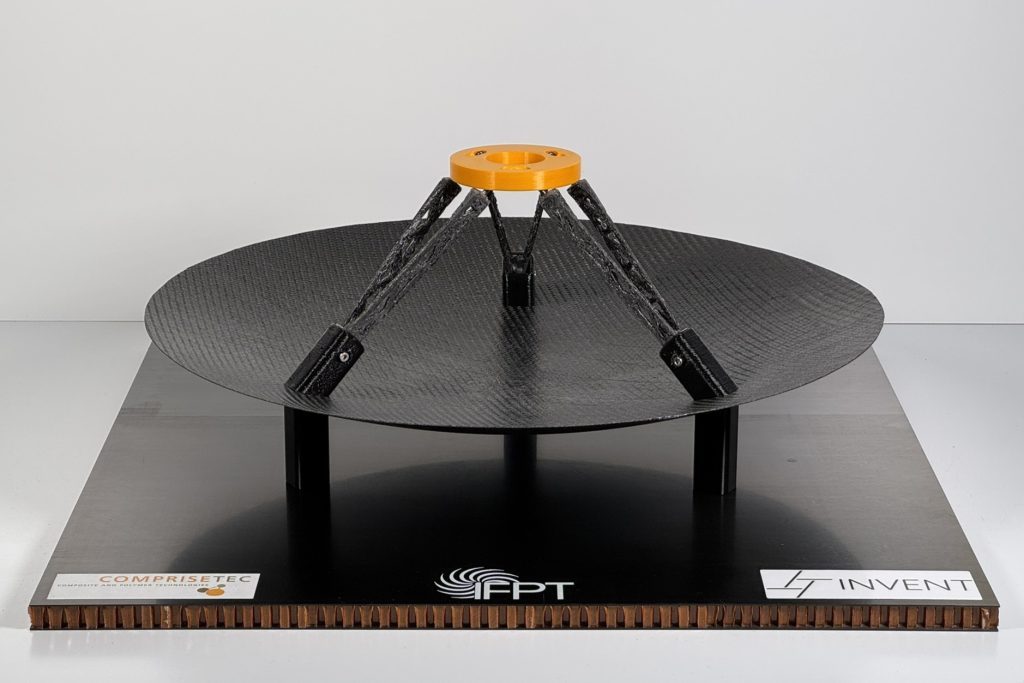
With ‘Robotic Dieless Composite Manufacturing’, CompriseTec, the Institute for Aircraft Production Technology (IFPT) at the Hamburg University of Technology (TUHH) and INVENT have developed a new approach to the tool-free manufacture of thermoplastic composite components. Two cooperating robots incrementally deform heated, continuous-fibre-reinforced organic sheets from both sides, thereby enabling the flexible production of complex geometries without geometry-specific moulds. A seamless digital process chain converts the CAD model directly into robot paths suitable for draping. In addition, fibre-reinforced functional elements can be applied directly to the formed surface using non-planar, robot-assisted additive manufacturing. This approach reduces tooling costs and lead times, thereby opening up new possibilities for the flexible and cost-effective production of prototypes, individual parts and small batches.
Platz 2 | fibclick gmbh
Pultrusion Planner – Digital and automated design of pultrusion processes using AI-based CAE software
Complex profile geometries were long considered uneconomical in pultrusion because the process design took a long time and was heavily dependent on experienced engineers. Augsburg-based fibclick GmbH has shed light on the ‘black box’ of production behaviour using a graph-based model and was awarded the AVK Innovation Prize 2026 for its work. Profiles designed using this approach are already in use in the EU and China, and the Pul-Planner software itself has been on the market since October 2026. A digital twin models fibre behaviour and material properties; AI then uses this to generate design proposals for tools and equipment, thereby reducing design time and failure rates: in one case, production time fell from 7 to 3 days. This ensures the company can continue to operate even in the event of staff turnover or illness. “We are seeing data-driven process design become established, and we are delighted to be able to offer pultrusion specialists an easy way to get started,” says Isa Taflan, co-founder of fibclick.
Platz 3 | Hornung osp
Partner: Steinbeis Innovationszentrum Smart Solutions
Biimtec – A new, patented operating principle for industrial surface treatment
Biimtec was developed for the efficient and reproducible preparation of surfaces for bonding, painting and coating processes. Particularly with modern and sensitive materials, large-area 2D components, complex 3D geometries or thin films, the challenge lies in creating a homogeneous and defined surface structure without subjecting the component to unnecessary mechanical stress.
Industrial blasting technology looks back on a history of development spanning more than 150 years. Biim-tec is introducing, for the first time, a new operating principle in which the transport of blasting media and the acceleration of particles are functionally separated and can be controlled independently. This patented process thus fundamentally distinguishes itself from previously established blasting technologies.
This decoupling allows a very high particle volume to be used whilst maintaining comparatively low blasting pressure. The result is a dense blasting pattern effective over a large area, enabling fast, uniform and contour-following processing of 2D and 3D surfaces. The higher area throughput reduces the number of passes required and processing times, thereby also lowering the energy consumption of the compressor, extraction system, robotics and system peripherals.
The process can be used on a wide range of materials – including CFRP, GRP, plastics, hybrid materials, metals, and thin and delicate films. Surfaces can be textured, roughened and modified in their surface properties in a targeted and reproducible manner.
Category science and research
Place 1 | Universität Stuttgart – Institut für Werkzeugmaschinen, Universität Stuttgart – Institut für Textil- und Fasertechnologien
Structural components made from pre-stressed fibre-reinforced mineral castings
Mineral casting has been used in machine tool manufacturing since the 1970s due to its outstanding vibration-damping properties.
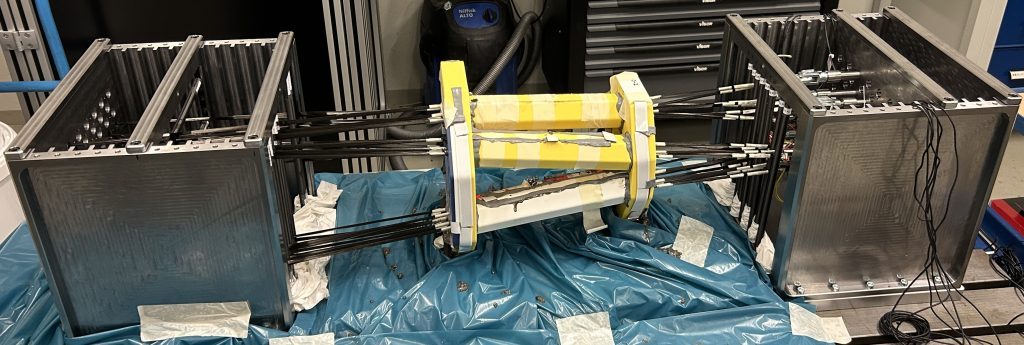
However, owing to the material’s comparatively low tensile strength, its range of applications is largely limited to stationary machine components such as machine beds. To expand its range of applications, the principle of prestressing – familiar from prestressed concrete – was applied to mineral cast for the first time as part of two DFG research projects. The integration of prestressed carbon fibre rovings results in the material ‘prestressed fibre-reinforced mineral cast’ (VFMG). This approach increases flexural stiffness by 33% compared with pure mineral casting, thereby enabling the use of VFMG in moving structural components of machine tools. Three demonstrators illustrate the potential, which lies primarily in high damping, weight savings of up to 65 per cent and a low carbon footprint.
Place 2 | Universität Bayreuth/ Lehrstuhl für Polymere Werkstoffe
The effect of fibre spacing and processing method on the mechanical properties of CFRP laminates for hydrogen pressure tanks
Dennis Droßel’s Master’s thesis investigated the influence of fibre spreading and the processing method on the mechanical properties of carbon fibre-reinforced plastic laminates. The aim of the thesis was to reduce the layer thickness by spreading the carbon fibres, thereby optimising component performance. The thesis thus supports the development of more sustainable, higher-performance and, at the same time, more cost-effective hydrogen pressure tanks for mobile applications such as fuel cell vehicles. Particularly innovative is the direct transfer of spreading technologies traditionally used in the prepreg sector to the winding process, and the identification of process adjustments to reduce defects. The combination of non-destructive testing, microstructural analysis and mechanical testing enables a previously lacking, holistic assessment of the effects of porosity, fibre-resin distribution and fibre damage on the interlaminar shear strength and tensile strength of such laminates.
Place 3 | Faserinstitut Bremen e. V.
Single-variety, incredibly strong, 100% recyclable — Subtitle: Innovative composite materials based on bicomponent polylactide fibres
Researchers from the Faserinstitut Bremen e. V. have been awarded the AVK Innovation Prize 2026 in the ‘Research/Science’ category for their pioneering work on self-reinforced polymeric materials. They used core-sheath bicomponent fibres based on polylactide (PLA) to produce single-polymer composites. Through targeted consolidation, the mechanical properties improve dramatically: the tensile strength almost doubles compared with pure PLA, whilst the modulus of elasticity has been increased almost threefold.
As the resulting SRP-PLA consists entirely of a single polymer family, it offers not only excellent performance but also outstanding recyclability – a milestone for the industrial circular economy.
Contact:
Katharina Wagner
+49 (0) 69 / 27 10 77 – 13
Katharina.wagner@avk-tv.de