Measured data instead of projections
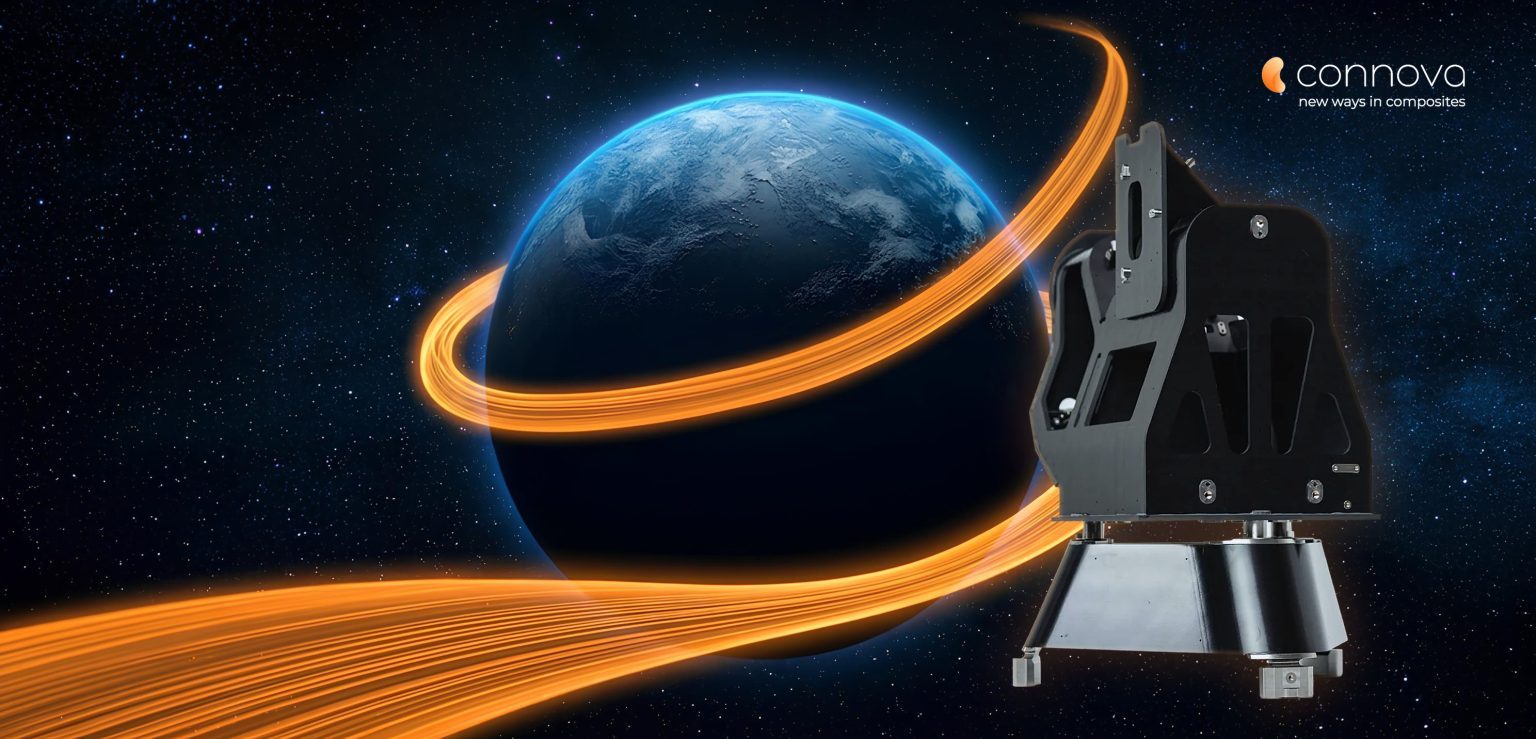
Under the Paris Agreement, more than 190 countries have committed to measurable emission targets. So far, however, these commitments can only be verified approximately, as national inventories rely largely on projections to determine how much CO₂ power plants, cities or entire countries actually emit. CO2M, the Copernicus Anthropogenic Carbon Dioxide Monitoring Mission, is designed to close this data gap. ESA is developing the mission on behalf of the European Union. From an altitude of around 735 kilometers, three satellites are set to measure emissions over individual power plants, metropolitan areas, regions and entire countries.
A structure on which the entire measurement depends
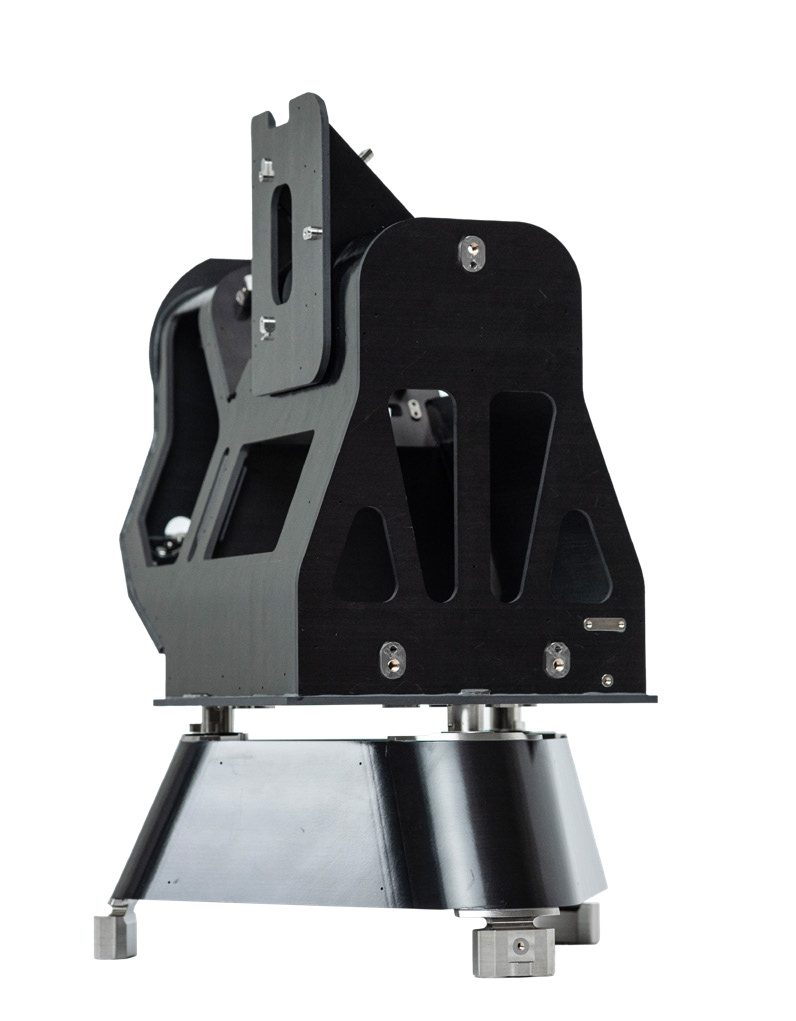
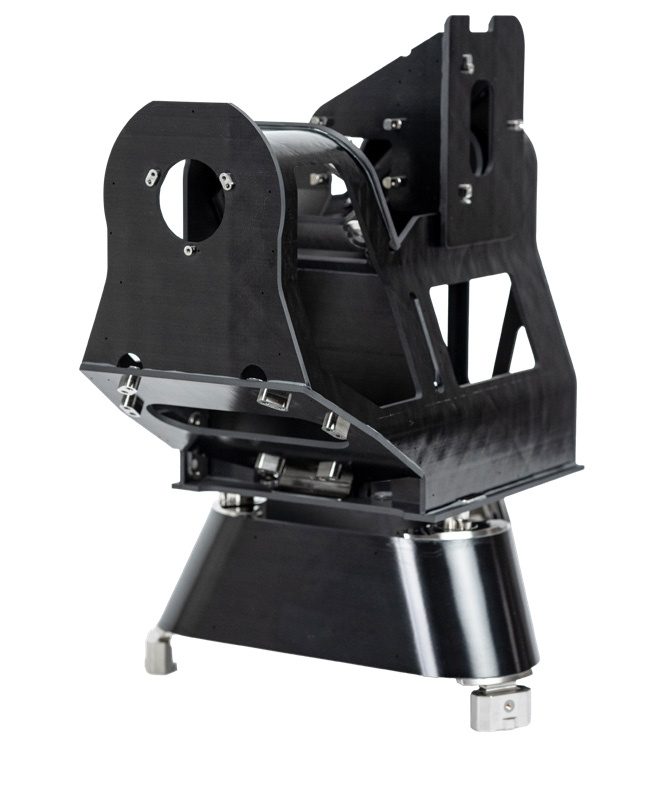
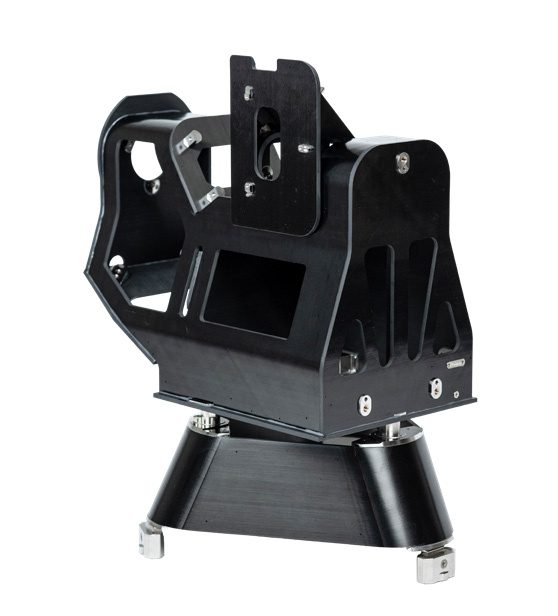
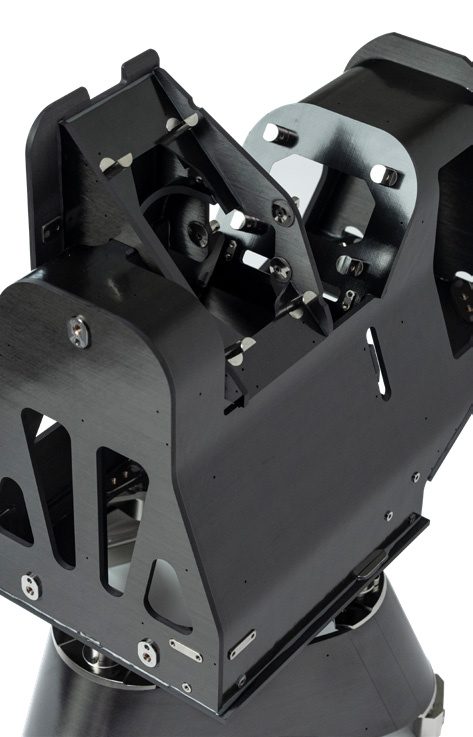
For CO2M to measure reliably, the optical instrument on board must maintain its geometry throughout the entire mission: under the high loads during launch, in vacuum and over thousands of thermal cycles. The telescope structure therefore has to be lightweight yet very stiff, remain thermally stable across the entire operating range and provide the highest dimensional accuracy at all optical interfaces. Added to this are the European space industry’s requirements for quality, documentation and traceability. This combination calls for a fiber composite structure whose behavior can be predicted precisely at the design stage.
Jointly designed, manufactured under one roof
During the concept phase, the engineering teams at Connova and Thales Alenia Space Schweiz compared several design approaches to achieve the best possible balance between stiffness, mass, interfaces and thermomechanical behavior. Connova was responsible for the entire value chain: design, material selection and procurement of the space-qualified materials, manufacturing of the individual parts, precision machining, assembly, qualification and acceptance tests, and documentation in accordance with ESA standards. With engineering, production and quality assurance working together under one roof, lines of communication were short – from the initial evaluation through to the finished assembly.
Precision by the numbers
- 02 mm: positioning accuracy at the optical interfaces of the finished assembly
- 2 mm: form tolerance of the laminated individual parts, made possible by compensating for spring-in at the design stage
- 1 setup: all mounting points for the mirror optics were finish-machined on a CNC jig in a single setup to minimize tolerance stack-up
- Qualification on representative coupons, including the outgassing behavior of all materials and the adhesive
Connova used laser-assisted projection to position the laminate layup precisely and repeatably. For assembly and bonding, the team relied on precision bonding jigs developed specifically for this purpose, which ensured the required positional and interface tolerances.
“Success is based on the close integration of the various departments and on the collaborative partnership with Thales Alenia Space Schweiz. Through the continuous exchange across all project phases, we were able to reliably translate complex requirements for precision, materials, processes and qualification into a flight-worthy structure,” says Sebastian Preiss, Head of Engineering at Connova AG.
The people behind the project
The engineering team led by Sebastian Preiss evaluated the design approaches together with Thales Alenia Space Schweiz and already accounted for the spring-in of the composite components in the structural design. Silvan Ventura, Project Lead Space Structures at the Connova Group, was responsible for manufacturing the telescope structures. The point of contact for space projects with comparable requirements is Taylan Toprak, Head of Sales & Project Management. A graduate aerospace engineer (TU Munich), he has over 30 years of experience in aerospace engineering.
Structural partner to the space industry for over 15 years
CO2M joins a series of space projects for which the Connova Group has been manufacturing fiber composite structures for over 15 years, as an ESA SME with quality management in accordance with EN 9100. These include the CFRP and titanium primary structure for Aeolus-Aladin, structural components for the CHEOPS satellite, the CoCa baseplate for Comet Interceptor and the support structure of the CHANCES telescope for ESA’s RAMSES mission.
The full case study, including the project overview, scope of services and images, is available free of charge as a PDF in German and English: https://www.connova.com/en/case-study-co2m-telescope-structure-for-esa-earth-observation/