- More optimistic assessment of the current business situation
- Outlook for the future characterised by optimism
- Investment climate is improving
- Expectations vary across different end-use industries
- Growth drivers with slight fluctuations
- Composites Index showing an upward trend
For the 27th time, Composites Germany (www.composites-germany.de) has collected current key figures on the market for fiber-reinforced plastics. All member companies of the supporting associations of Composites Germany were surveyed: AVK and Composites United, as well as the associated partner VDMA.
In order to ensure that the different surveys could be easily compared, no fundamental changes were made to the questionnaire in this half-year period. Once again, the data collected was predominantly qualitative in nature and related to current and future market developments.
A More optimistic assessment of the current business situation
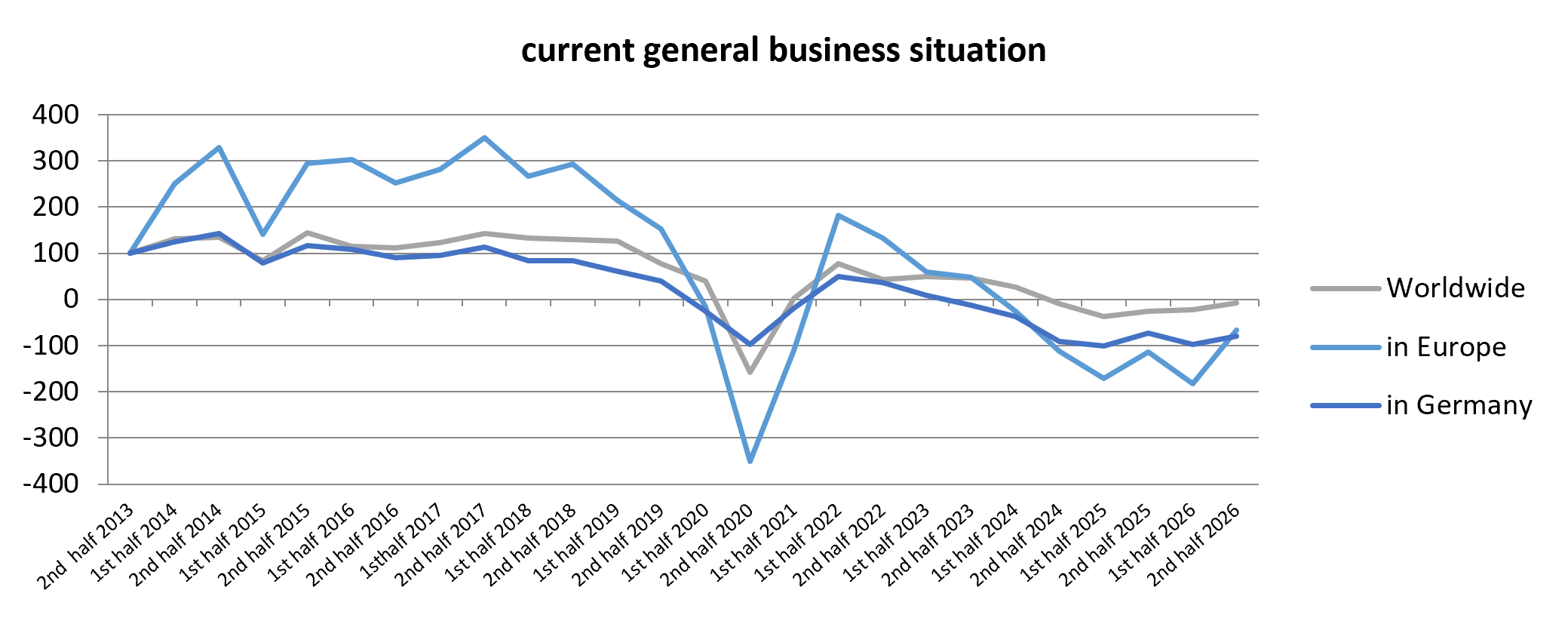
Whilst the last survey revealed contrasting trends across the regions surveyed in terms of the assessment of the general business climate, the current survey shows an improvement in the assessment for all regions (Germany, Europe, the world). (See Fig. 1).
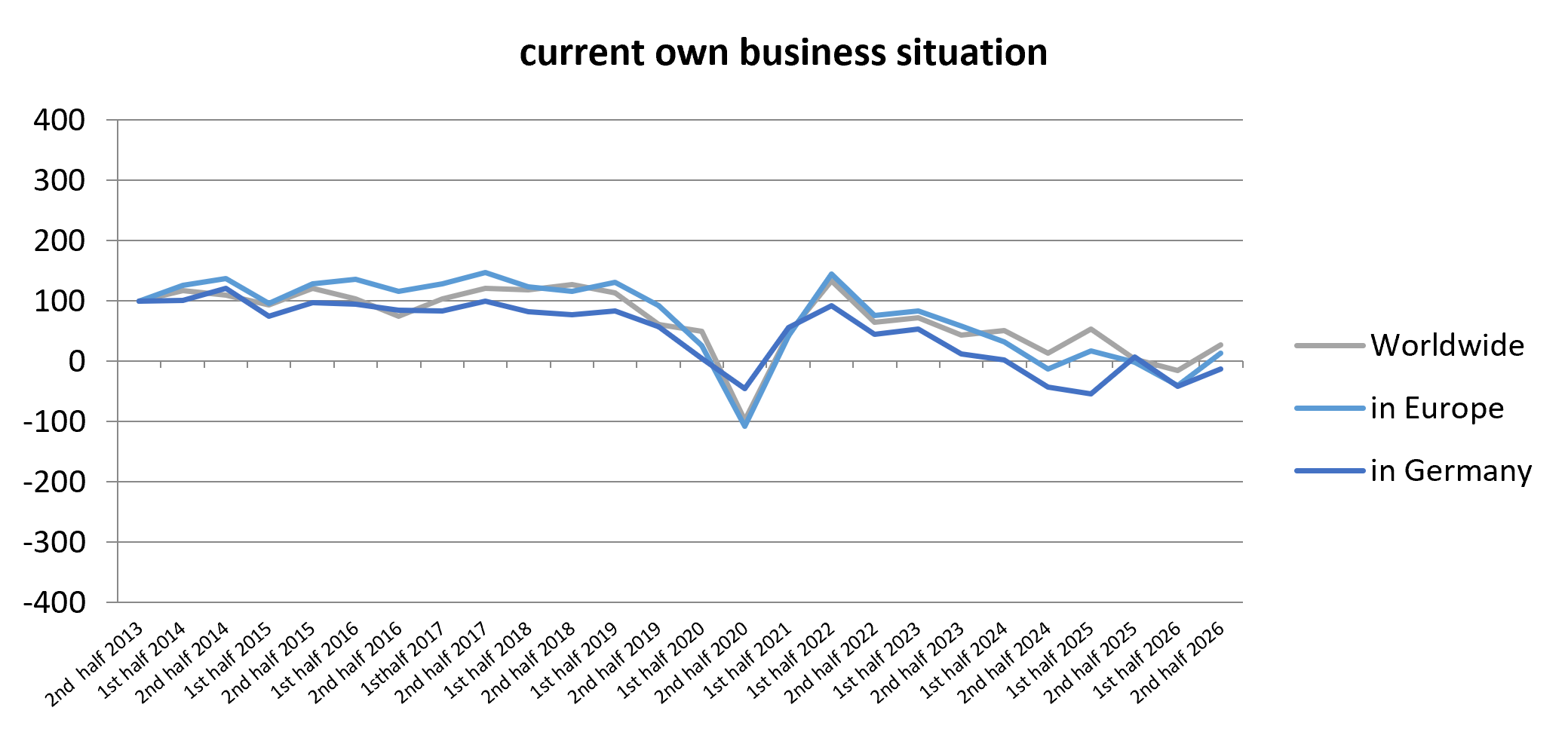
Particularly striking is the sharp rise in the assessment of the general business situation in Europe, whereas the assessment for Germany and globally has risen only slightly. This trend is supported by the assessment of the current business situation for respondents’ own companies. Here, too, a more positive assessment can be observed across all regions. (See Fig. 2).
Against the backdrop of the current challenges, this assessment sends a positive signal from the industry. Overall, production volumes in Europe continue to decline. As a result of the COVID-19 crisis, the market volume has fallen by around 25 per cent since 2021. Europe’s share of global production volumes continues to decline due to an increasingly expanding global market. The reasons for this are manifold and have not changed fundamentally since the last survey. On the one hand, there is increasing competition from non-European countries, particularly Asia and the USA. Furthermore, previously important export markets are increasingly being lost, which is attributable partly to weaknesses in the respective domestic markets, but above all to these markets being increasingly supplied by domestic production. Trade barriers, such as the current tariff policy in the USA, are further exacerbating the situation. These challenges are compounded by a general weakness in the industrial sector, with a significant exodus of industrial production from Europe. The persistent structural weaknesses in the main application sector of transport and automotive are also having a significant impact.
The now more positive assessment of the market situation by the companies involved appears to indicate that the current structural transformation is also giving rise to numerous new opportunities which companies are well placed to capitalise on. For the composites industry, key sectors alongside the transport sector – such as construction/infrastructure and electrical/electronics – are currently showing positive growth again after having bottomed out, and the current forecasts remain optimistic.
Outlook for the future characterised by confidence
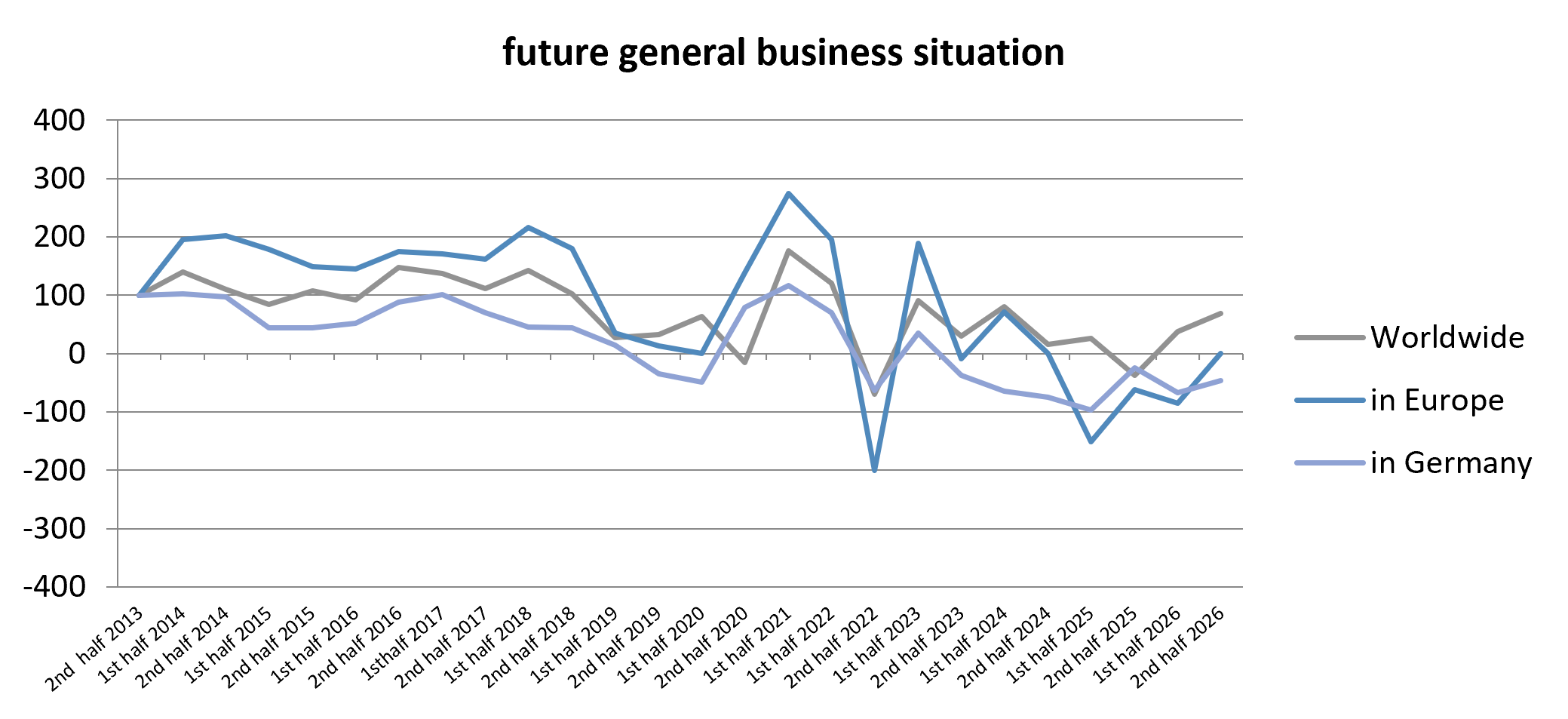
In line with this assessment, the index measuring expectations regarding the future general business climate is showing a positive trend. The relevant indicators for the three regions surveyed are pointing clearly upwards. (See Fig. 3). It must be clearly emphasised, however, that only around one in four to one in five of those surveyed expect an improvement. The vast majority still expect the business climate to remain unchanged.
Investment climate is improving
Whilst the last survey at the start of the year revealed a marked deterioration in investment indicators, the picture has brightened significantly in the current survey. Positive shifts are evident both in terms of staffing plans and planned investment in machinery and plant.
The proportion of respondents who consider machinery investment likely or are planning such investment has risen from 38 per cent (survey for the first half of 2026) to 56 per cent.
(See Fig. 4).
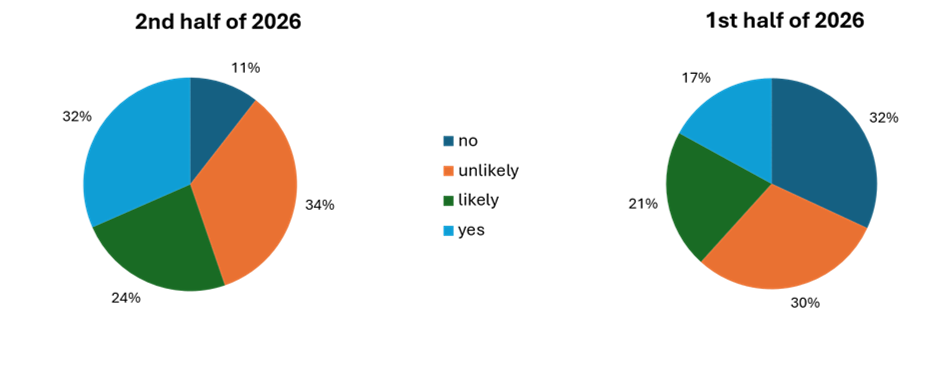
A positive trend is also evident in workforce planning. The proportion of those planning to increase their workforce has risen from 18 % to 26 %, whilst the proportion of those expecting to reduce their workforce has fallen from 36 % to 21 %.
Overall, around one-third of respondents expect to increase their involvement in the composites sector, whereas only 5 % of respondents expect their involvement to decline.
Expectations vary across industries
The composites market is characterised by a high degree of heterogeneity in terms of both materials and applications. In the survey, participants were asked to give their assessment of market developments in various key sectors. Expectations vary considerably. (See Fig. 5).
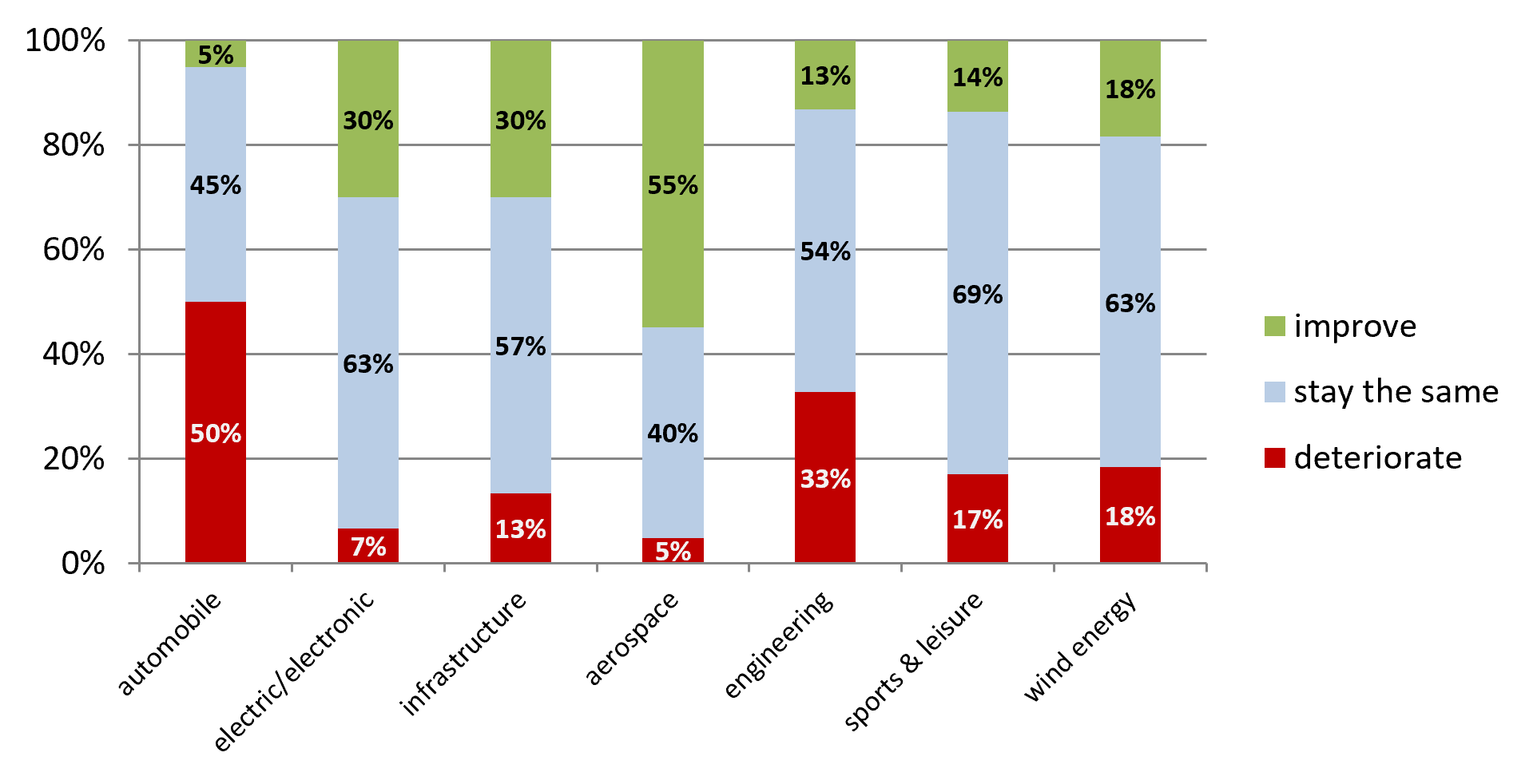
The most important area of application for composites is mobility, and within this, the automotive sector in particular. This sector is currently undergoing major upheaval and is in the midst of a massive crisis in Europe and Germany. This is also clearly evident from the survey. Growth is expected primarily in the aviation, construction/infrastructure and electrical/electronics sectors. After four years of declining volumes, experts anticipate a recovery, particularly in the construction sector in Germany: “The German construction industry is on the cusp of a turnaround: following years of declining construction output, construction volume is expected to grow again in 2026 for the first time since 2020. According to the latest construction volume estimates from the German Institute for Economic Research (DIW Berlin), construction volume is expected to increase by 1.7 per cent this year and by 3.4 per cent in 2027.“[1]
Growth drivers through simple movements
The latest survey once again reveals slight shifts in the drivers of growth. When it comes to assessing which sectors will provide the key drivers of growth for the composites industry in future, carbon fibre reinforced plastic (CFRP) and glass fibre reinforced plastic (GFRP) are gaining influence as material systems, in favour of a cross-material effect.
Regionally, there have been only slight shifts. The main growth drivers are still expected to come from Asia and the EU. Germany and North America, as growth drivers, remain virtually unchanged at a low level.
Composites Index showing a positive trend
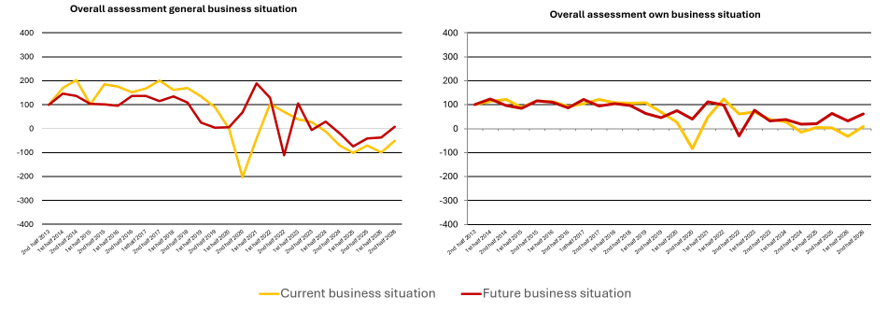
Following a downward trend in the last survey, the Composites Index is now turning positive across all sectors. (See Fig. 6).
Composites generally offer an excellent range of properties, which explains their increasing use across numerous application sectors. The potential for lightweight construction, corrosion resistance, design freedom and outstanding sustainability credentials are just a few examples that make them a compelling choice. At present, a negative economic and, above all, industrial trend can be observed, particularly in Germany but also across large parts of Europe. The manufacturing sector is particularly affected by this. Given its high dependence on overall economic trends, the composites sector is also significantly impacted.
The production of composites in Europe continues to decline. In many cases, however, it is evident that demand for these materials is not affected by the downturn to the same extent. A significant shift in production can be observed here, and demand is increasingly being met not from Germany or Europe, but from non-European countries.
It remains to be seen whether a general reversal of the trend can be achieved. Many see opportunities here in shifting production away from price-sensitive commodities towards specialities and innovative materials and products. At present, it seems impossible to win a price war against non-European competitors. Consequently, existing business models must, in some cases, be radically rethought.
On the political front, numerous measures are currently being taken to strengthen the German and European economies. However, ideas and plans – including those relating to financing – must then be put into practice. The construction and infrastructure sectors, in particular, could receive a significant boost from the German growth package. Only by working together will it be possible to maintain and further strengthen Germany’s position as a centre of business and industry. For composites as a material group in general, the specific portfolio of properties continues to present very good opportunities for expanding their market position in both new and existing markets.
The aim now is to tap into new market sectors through innovation, to make the most of opportunities and to work together to further integrate composites into existing markets. This can often be achieved more successfully through collaboration than acting alone. With its excellent network, Composites Germany offers a wide range of opportunities.
The next Composites Market Survey will be published in January 2027.
[1] DIW Berlin: https://www.diw.de/de/diw_01.c.996818.de/kehrtwende_am_bau__die_zeichen_stehen_wieder_auf_wachstum.html
Press inquiries
Composites Germany
Dr. Elmar Witten (AVK)
+49 69 271077-0
elmar.witten@composites-germany.org
About Composites Germany
The two strong organizations of the German lightweight construction/composite industry want to strengthen the German composites industry and research, define common positions and safe-guard overarching interests with the Composites Germany trade association.
AVK – Industrievereinigung Verstärkte Kunststoffe e. V. and CU – Composites United (as well as VDMA – Arbeitsgemeinschaft Hybride Leichtbau Technologien as an associated partner) are joining forces to promote the future topics of high-performance composites and automated production technologies in and for Germany.
Further information at: http://www.composites-germany.org