In urban rail transport, every kilogram counts. Metro trains, trams and regional trains accelerate and brake at short intervals. Lower vehicle mass can therefore reduce energy demand while creating additional freedom in design, payload and drive systems. Fibre-reinforced composites offer high specific stiffness and strength, corrosion resistance and good opportunities for functional integration.
Numerous applications in rail vehicle construction show that the topic has moved beyond isolated demonstrators. GFRP sandwich structures can reduce the weight of rail floors while integrating functions such as heating or moisture protection. Pultruded profiles and thermoplastic semi-finished products offer further routes towards cost-efficient series components. Composite solutions are also being tested and used for cladding, interior components and increasingly for more highly loaded structures.
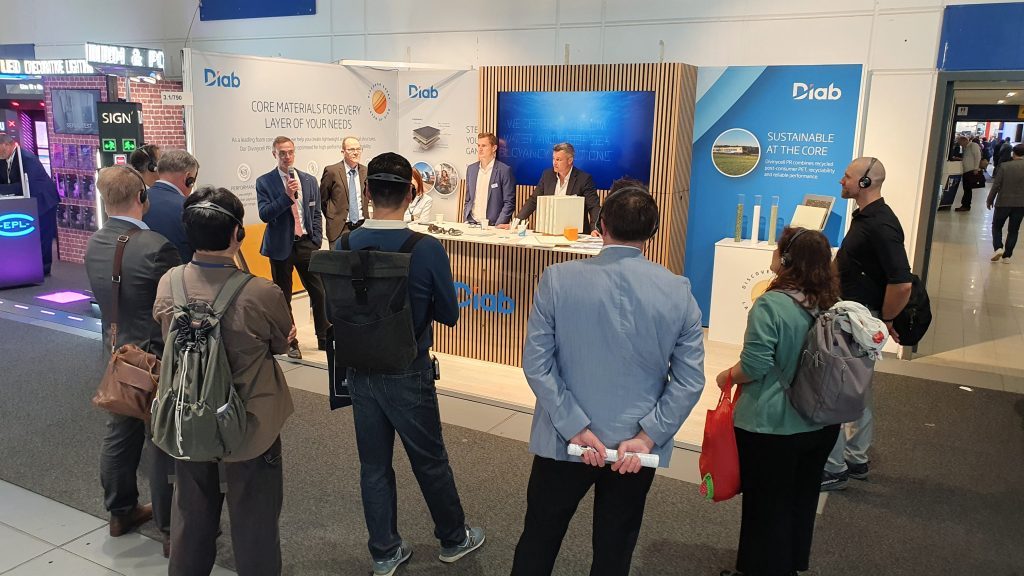
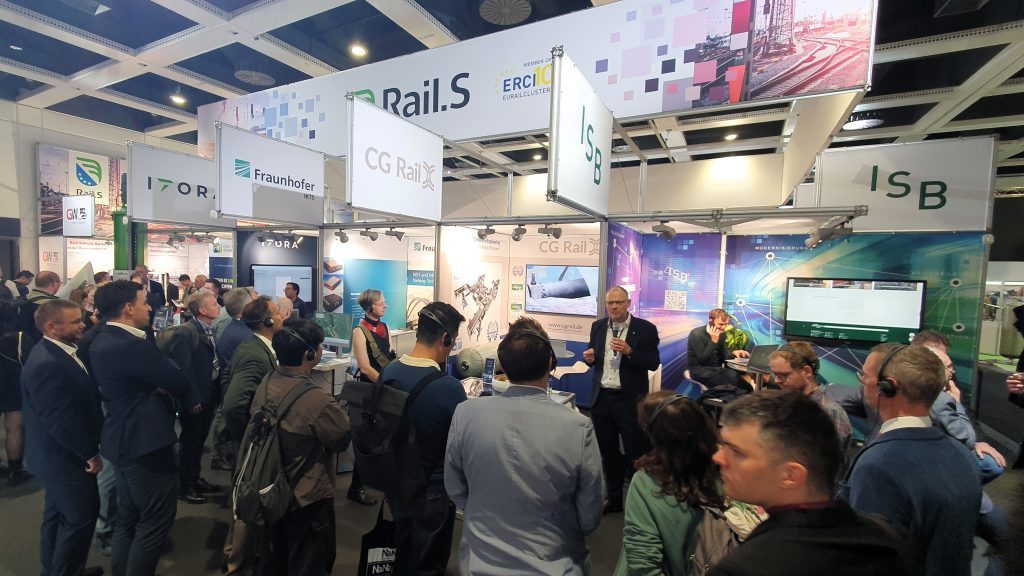
InnoTrans 2026 in Berlin showed how topical these questions are. The rail industry is under pressure to make vehicles more energy-efficient, reliable, low-maintenance and economical while advancing digitalisation, automation and new propulsion concepts. For composites there is an additional challenge: new designs must prove themselves within a regulatory and approval environment still largely shaped by metallic structures. Fire safety, reproducible manufacturing, repairability, cost and recycling therefore need to be considered from the outset. This was precisely the focus of the Composites United tour “Lightweight Technologies Meet Rail Transport” on 23 September. Numerous approaches and solutions were presented by selected exhibitors. Three examples from this broad spectrum illustrate the range: CG Rail demonstrated how pultrusion enables the continuous and cost-efficient production of continuous-fibre-reinforced GFRP and CFRP profiles, including complex profile structures for highly loaded applications. Diab presented lightweight PET sandwich cores for floors as well as interior and exterior structures. KVB and LiCoMo illustrated another important aspect: how composite innovations can be transferred from application-oriented research into industrial implementation – from design, structural engineering and process development through to prototype, small-series and series production of composite components.
Technically, much is already possible. For broad market adoption, however, weight reduction alone is not enough. What matters is the benefit over the entire life cycle – from production and approval to operation, maintenance and recycling.
The future will therefore probably not lie in replacing metallic rail vehicles completely, but in using the right material in the right place: from functional flooring and profiles to cladding and highly loaded structural components. This material-appropriate combination offers considerable potential for lighter, more efficient and more durable public transport.
Diab presents lightweight PET sandwich cores for floors as well as interior and exterior structures.
CG Rail demonstrates how pultrusion enables the continuous and cost-efficient production of continuous-fibre-reinforced GFRP and CFRP profiles.
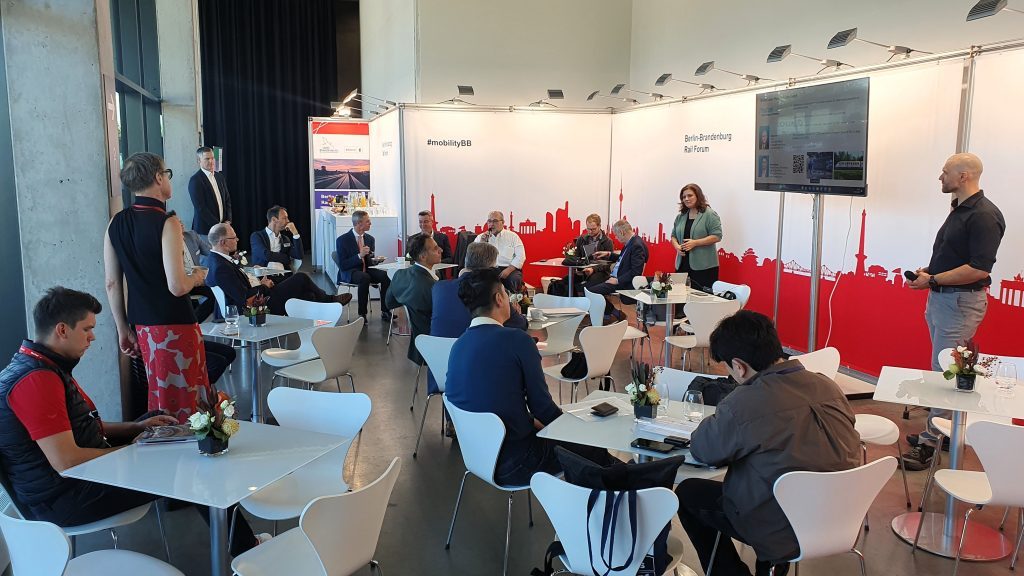
Participants in Composites United’s “Lightweight Technologies Meet Rail Transport” tour share their experiences and knowledge with one another at InnoTrans 2026.